

Certification training
Certification program
Conservator–Restorer of paintings and polychrome artworks
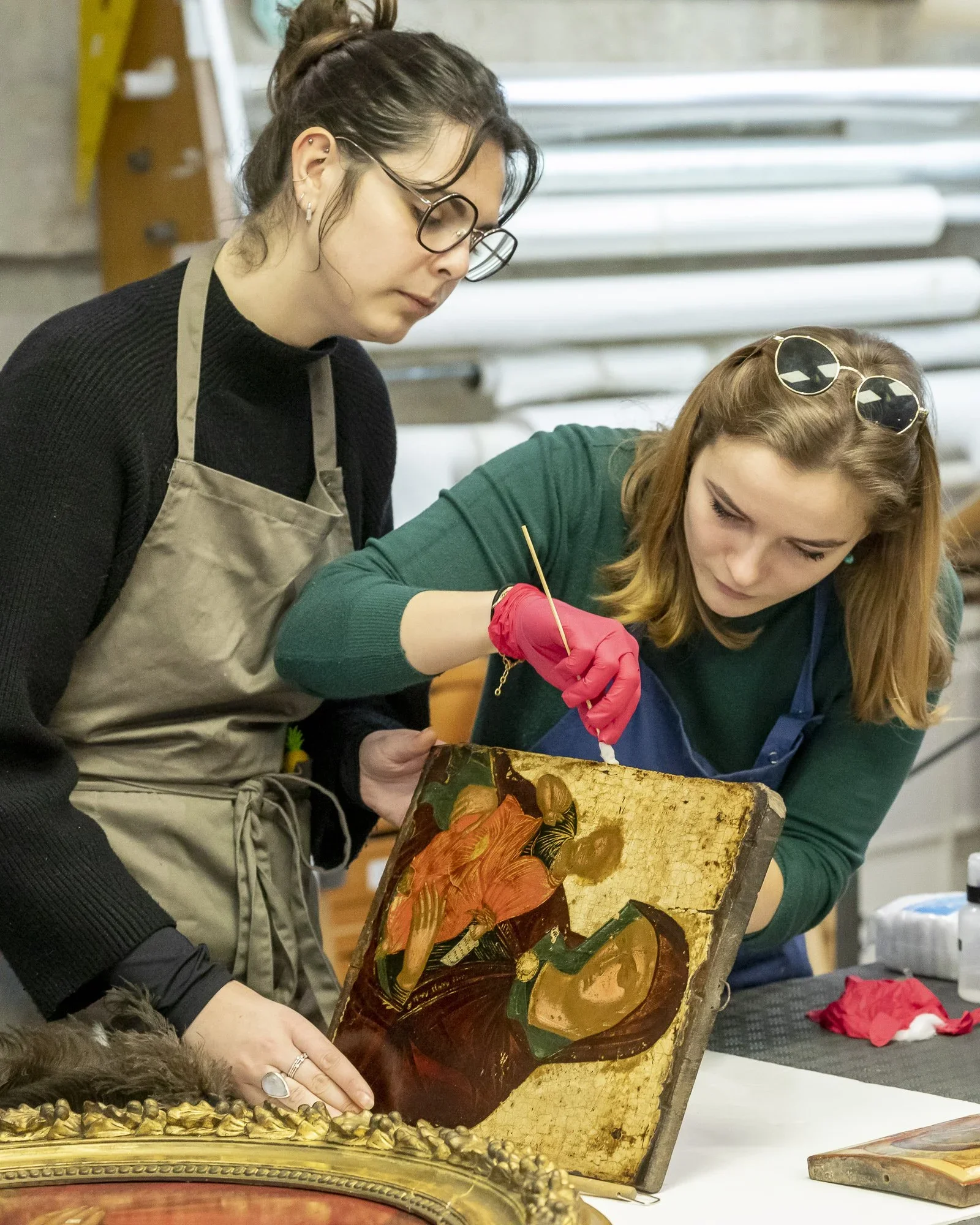
An immersive training program
Our training takes place within the Atelier du Temps Passé, a privileged environment that allows learners to encounter numerous specific cases and refine their skills through direct contact with experienced artisans.
A comprehensive and qualifying program
The program offered by ATP reflects the daily work of a restorer and provides our learners with all the theoretical knowledge, techniques, and practical reflexes necessary to practice as conservator–restorers.
Clear educational objectives
ATP Formation aims to train qualified professionals capable of working independently. This autonomy is gradually developed throughout the training program, as well as through mandatory immersive internships.
-
Prerequisites: A Baccalauréat (any specialization) or an equivalent Level 4 certification.
A general knowledge test on art, painting, and the conservation–restoration of cultural heritage is required before any enrollment can be approved.
A color vision test is also administered during the candidate selection process.
-
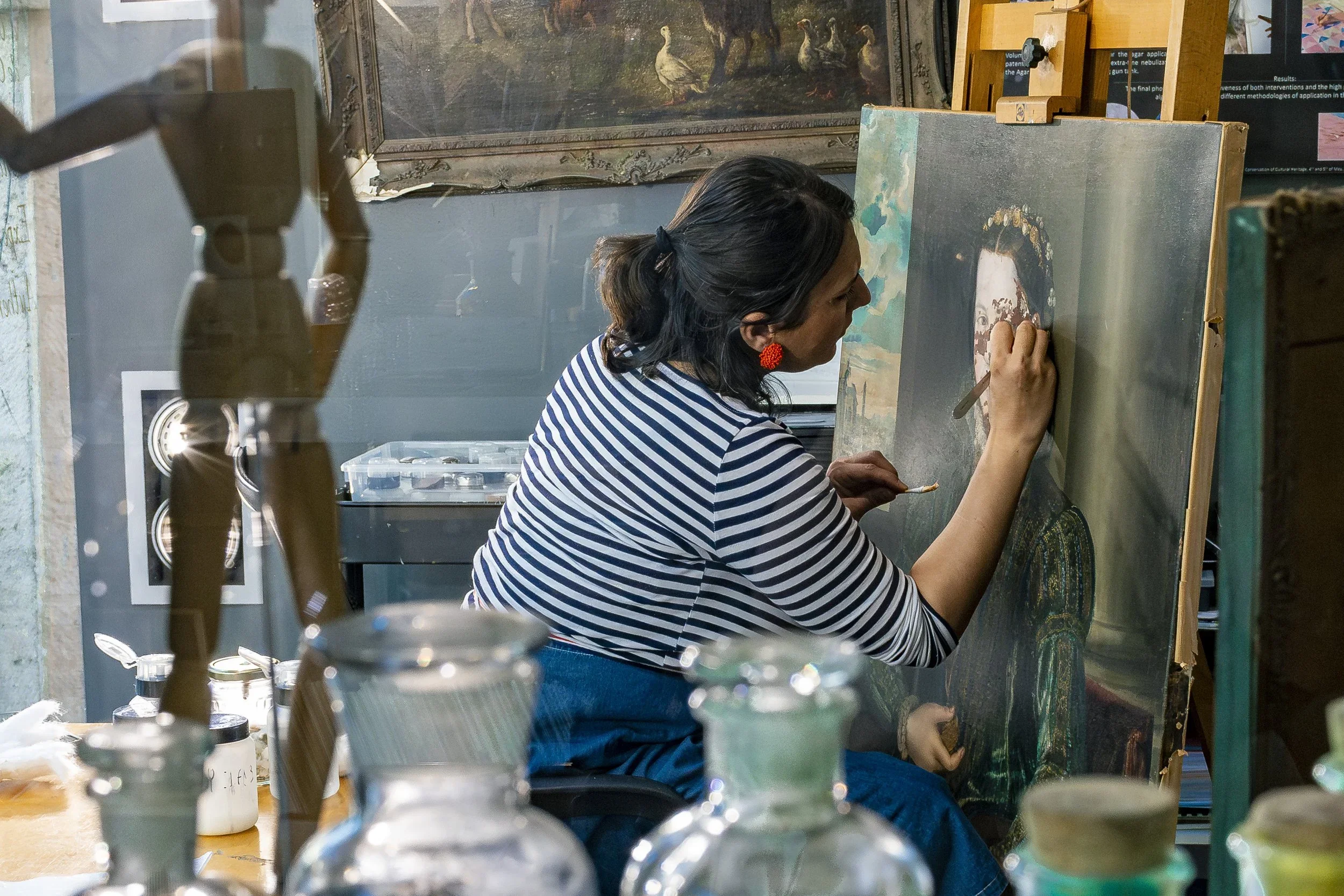
Implementation and execution of conservation–restoration work on paintings and polychrome artworks
Communication and professional relations with the owners or representatives of a cultural property, as well as within a network of professional partners.
-
The profession of conservator–restorer is highly versatile. In the course of their work, an expert in the restoration and preservation of cultural heritage may be required to carry out the following tasks:
Receiving a request for the conservation–restoration of an artwork (painting or other polychrome object) and communicating with the client or commissioner
Condition assessment and diagnosis of the painting or polychrome artwork
Studies and research
Development of an intervention plan and treatment protocol for the conservation–restoration of a painting or polychrome artwork
Implementation of the conservation–restoration treatment plan
Writing the conservation–restoration report for a painting or polychrome object
Administrative management and commercial procedures
Ongoing scholarly monitoring and continuous professional development
-
Certificate for Conservator–Restorer of Paintings and Polychrome Artworks: 3-year training program
Validation of Prior Learning (VAE) through a personalized pathway: variable training duration.
-
From mid-September to early July (holidays follow the Paris Academy calendar)
-
Year 1 – €12,867
Year 2 – €11,270
Year 3 – €10,176Total 3-year program (including registration fees): €34,313*
Flat fee for Validation of Prior Learning (V.A.E.) – administrative costs and pedagogical support: €3,500
External funding application file (CIF, MCP, AFDAS, etc.): preparation of the application for funding support = €500 (incl. VAT). This amount includes all administrative documents (training agreement, quotation, detailed program, attendance sheets, pedagogical report, mailing fees, payment schedule, attendance certificates, invoices in triplicate, etc.).
-
Assessment methods: Candidates who follow the full preparatory program take part in various types of examinations, whose complexity and scope evolve as they progress through the curriculum.
These examinations are individual, and the formats vary: personal assignments, written tests, professional written work, practical assessments, and more.
The final examination consists of submitting a written thesis on the conservation–restoration of an artwork carried out by the candidate, followed by an oral defense before a jury composed exclusively of professionals in the field.
-
Internships are mandatory and must be completed outside of class hours and throughout the entire training program (490 hours). They constitute a module that must be validated as part of the certification process. Internships may be undertaken in France or abroad.
This immersion in a professional environment enables future Conservator–Restorers to enter the field progressively and to develop their professional network.
-
Please note that the training program for conservator–restorers can be funded in several ways depending on your situation:
If you are an employer: through your OPCO.
If you are an employee: through Transition Pro.
If you are self-employed: through FIF/PL.
If you are an artisan: through FAFCEA.
If you are a business owner: through AGEFICE.
If you are a freelance professional: you may be eligible for financial assistance to fund your training if you have paid the CFP (Contribution to Professional Training). This assistance is managed by a training insurance fund (FAF), which varies depending on the nature of your activity—i.e., according to your NAF or APE code.
If you are a job seeker: consult France Travail and your Regional Council to learn about your entitlements.
If you wish to have your skills recognized through VAE: the Validation of Prior Learning (VAE) allows you to have your skills assessed and recognized, in full or in part, toward our certification.
For complete information on the different ways to fund your training, download the following document
-
ATP-Formation can implement specific measures and adaptations to accommodate and train learners with disabilities.
A disability coordinator has been appointed within the teaching team and is committed to raising awareness among learners and instructors about this issue and its implications.For individuals with disabilities, please contact us.
Consult the information sheet “Welcoming People with Disabilities” prepared by the Ministry’s Accessibility Delegation.
Our training program
3-year training program
Conservator–Restorer of Paintings and Polychrome Artworks
RNCP Certificate No. 40929
Prerequisites
Completion of the Baccalauréat (any specialization) and normal color vision.
Program dates
Mid-September to early July
Number of trainees
8 to 16
€34,313
(registration fees included)
Teaching and skills development are organized into several areas:
> the conservation–restoration division
> the technical–scientific division
> the general knowledge division
> the artistic skills division
> the Professional Project module and the “Expert Days” in the 3rd year
An exciting training program
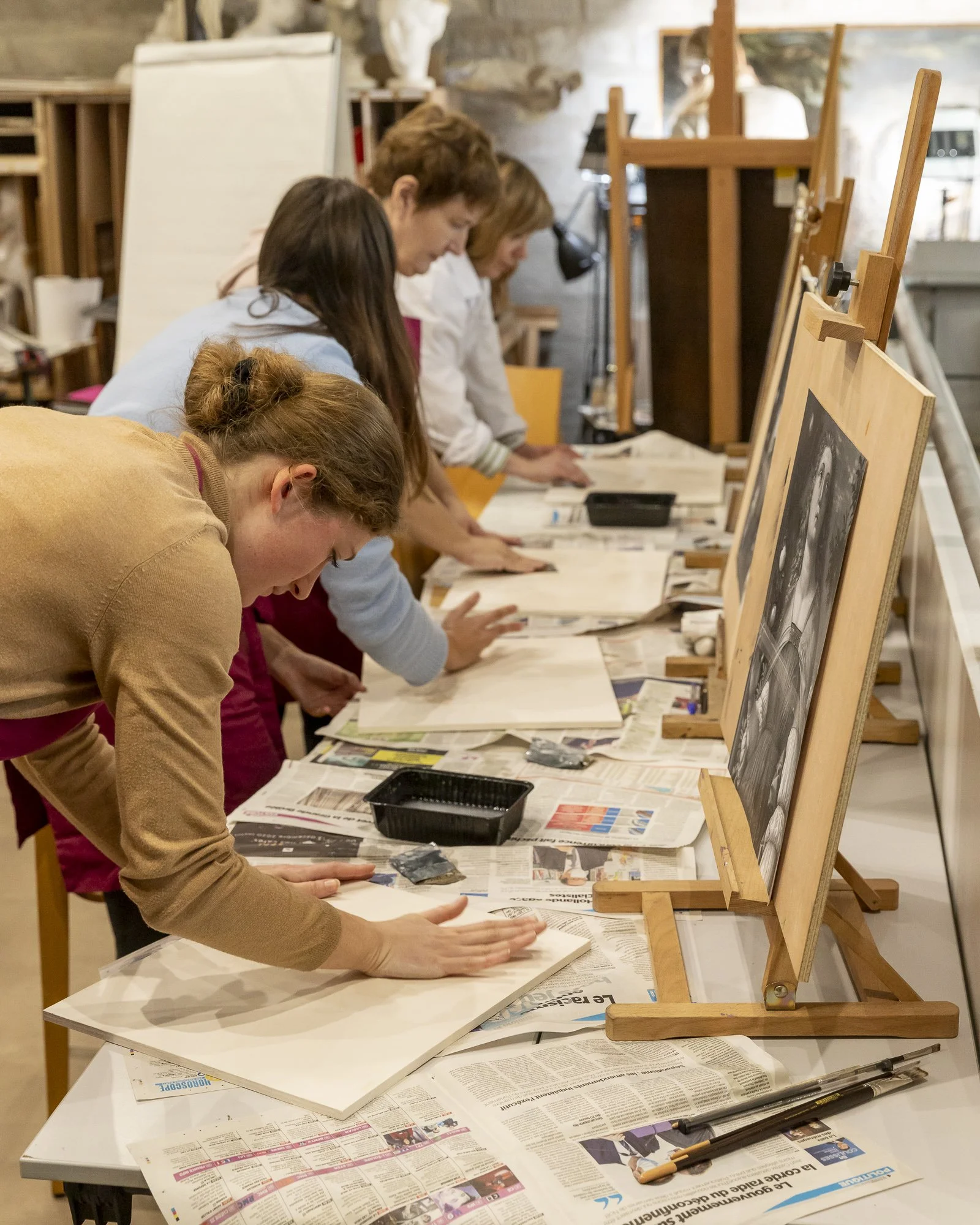
Theoretical courses
Learners acquire a solid foundation of knowledge, enabling them to move on to practical work with confidence. Among the subjects taught:
the history of the conservator–restorer profession
the art history of painting
histoarchaeometry (imaging applied to painting)
physics, chemistry, and biology…
Practical work
During their hands-on training, learners carry out a wide range of standard and exceptional operations:
minor interventions (thread-by-thread repairs, patch placement, tension strips)
consolidation and fixing
lining using thermoplastic resins or traditional relining
cleaning tests and complex implementation of varnish reduction
filling of losses
retouching and varnishing…
Museum visits
These sessions in front of artworks (Musée du Louvre, Petit Palais, etc.) allow learners to analyze them through a “cross-perspective” combining the viewpoints of the conservator–restorer and the art historian.
Additional internships
All learners are required to complete internships in order to deepen their knowledge and techniques (a minimum of 490 hours over the 3-year program). From the Paris region to the Himalayas, our students may choose to stay in familiar surroundings or venture into the unknown…